Beaches and Coves of Caprera: Hidden Paradises
Caprera is famous for its beaches, some of which are considered among the most beautiful in the Mediterranean. Here is a guide to the main ones.
Cala Coticcio: The “Tahiti” of the Mediterranean
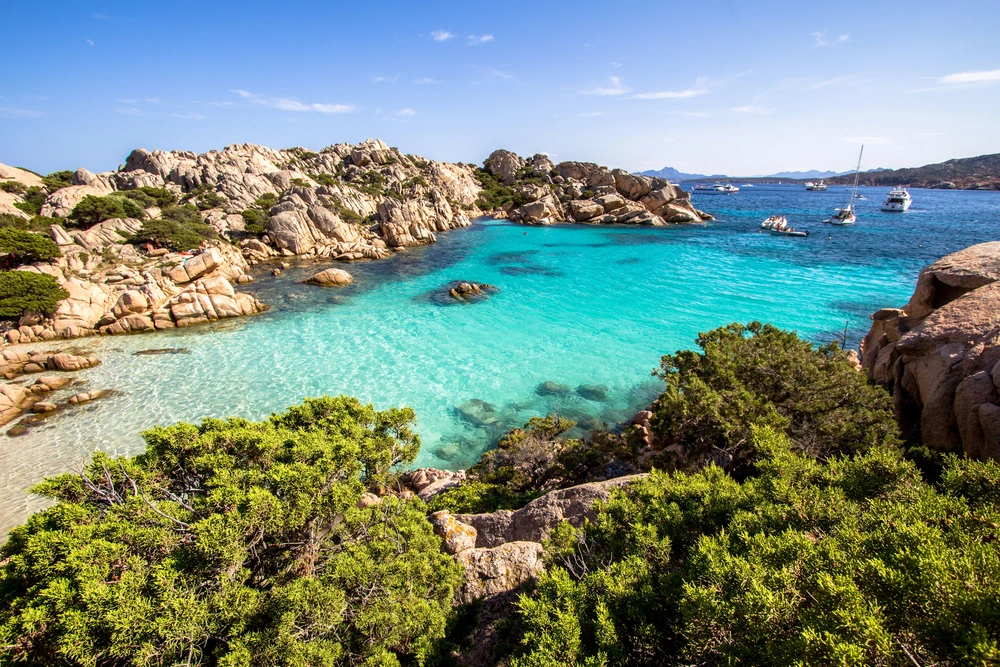
Coticcio Cove is undoubtedly the most famous beach in Caprera and one of the most photographed in Sardinia. Nicknamed “Tahiti”.” with its turquoise waters and white sand, is a small paradise on earth that leaves you speechless.
Features:
-
Consisting of two very small coves: the beach to the west (about 19 metres) is known as Cala Tahiti
-
Fine sand and crystal-clear water with Caribbean reflections
-
Surrounded by granite rocks and Mediterranean maquis
How to get there:
-
By seais the most comfortable and spectacular solution. Our sailing excursions often include a stop in the waters of Cala Coticcio, allowing you to admire the beach from the sea and swim in this paradise.
-
By landIt can also be reached by following a trekking path of easy-medium difficulty that starts in the interior of the island .
Attention: the marine area in front of Punta Coticcio, including Cala Coticcio, is protected by measures of the Park Authority . It is essential to respect the rules and not to anchor on posidonia.
Cala Napoletana
Cala Napoletana is another pearl of Caprera, characterised by a sea so transparent that the parked boats seem to levitate in the air.
Features:
-
Divided into three small beaches interspersed with tafonate rocks (with special shapes carved by erosion)
-
Fine, soft white sand
-
Granite rocks with pinkish hues, smoothed by wind and waves
-
Crystal-clear water full of colourful fish
How to get thereAccessible by sea or through the island's footpaths .
Cala Serena
Cala Serena is the perfect name to describe the peaceful atmosphere that surrounds it. It is a beach characterised by fine light-coloured sand and outcropping rocks, washed by a sea that changes from emerald green to azure blue.
Ideal for: those seeking tranquillity and relaxation away from the crowds.
More Beaches to Discover
Caprera offers numerous other coves and beaches, each with its own unique character:
-
Cala Portese: light fine sandy beach with outcropping rocks
-
Cala Capraresedivided into three small beaches interspersed with white, very high rocks
-
Spiaggia del Relittofine pale sand, crystal clear sea and the remains of a stranded ship that add a touch of mystery
-
Cala Garibaldidark golden sand, coarse, washed by an iridescent sea from emerald green to blue with shades of indigo
-
Andreani Covelocated in the Punta Rossa area, an area of maximum environmental protection
The Wild Nature of Caprera: Flora and Fauna
In addition to beaches and trails, Caprera is a biodiversity sanctuary that deserves to be explored with respect and curiosity.
Flora: Mediterranean Thicket and Wild Orchids
The vegetation of Caprera consists mainly of the typical maquis . Walking around the island you will encounter:
-
Myrtle, mastic, rosemary and lavenderthe scents of the maquis mingling with the saltiness
-
Juniper, wild olive and euphorbia: hardy species that inhabit the driest stretches
-
Pines and holm oaks: they grow in the most sheltered and humid areas
-
Wild orchidsin spring, the island is covered with small, beautiful wild orchids, a sight not to be missed by enthusiasts
The Fauna: A Birdwatching Paradise
Caprera is a true paradise for ornithologists. With a little patience and a good pair of binoculars, you will be able to spot:
-
The Queen's falcona rare bird of prey soaring majestically in the island sky
-
The Corsican seagull: a protected species that nests in wilderness areas
-
The tufted marangone (tufted cormorant): difficult to see elsewhere
-
The Collared Blackbirdits harmonious song accompanies walks in the bush
-
Jackdaws and kestrelsCommon in the skies of Caprera
In the archipelago in general you can also find sparrow hawks, buzzards, buzzards and wild pigeons
Military Fortifications
One of the most fascinating aspects of Caprera is the presence of numerous military fortifications, cleverly camouflaged among the rocks and the Mediterranean maquis .
A Plurisecular Defence System
The system of forts and fortifications of Caprera and the entire archipelago was built in three different historical periods:
-
1767-1806The first nucleus of fortifications dates back to the end of the 18th century, when the Kingdom of Sardinia militarily occupied the islands to assert its rule. Forts such as San Vittorio (Guardia Vecchia), Sant'Andrea, Balbiano and Sant'Agostino were built during this period.
-
After 1887A second phase of defence strengthening.
-
Between World War I and World War IIthe last great season of military construction, with coastal batteries and anti-aircraft emplacements scattered at strategic points.
The Forts of Caprera
On the island of Caprera, the main fortifications are located at:
-
Punta Rossa: the extreme southern tip of the island is home to important coastal batteries
-
Teialonefortifications dominating the landscape
-
Arbuticcihere arises the Fort Arbuticci, now home to the Garibaldi Memorial
-
Candeo, Zavagli and Zanottoother military posts dotting the island
These works, although conceived for war purposes, today blend perfectly with the landscape, offering fascinating historical evidence and privileged vantage points over the archipelago
How to Visit Caprera: Practical Information
How to get to Caprera
Caprera is connected to the island of La Maddalena by a bridge over the Passo della Moneta . To get there:
-
Reach Palau and take the ferry to La Maddalena (Delcomar or Maddalena Lines).
-
Once at La Maddalena, you can continue by car, scooter or public transport across the bridge to Caprera.
ImportantThe bridge is low and sailing boats cannot pass under it. If you arrive by sailboat, the recommended landing place is at La Maddalena, from where you can continue by land.
When to Visit Caprera
The best time to explore Caprera on foot and enjoy its beaches is from April to June and by September to October :
-
Springideal temperatures for trekking, wild orchid blooms, less crowding
-
Summerperfect weather for the sea, but intense heat for hiking (best to leave early in the morning)
-
Autumn: sea still warm, pleasant temperatures, tourists decreasing
What to bring
-
Hiking shoes (or trainers with good soles) for the trails
-
Rock shoes for the rockiest coves
-
Enough water (fundamental, on the paths there are no sources)
-
Packed lunch and snacks
-
High-protection sun cream (possibly eco-friendly)
-
Cap and sunglasses
-
Mask and snorkel for snorkelling
-
Binoculars for birdwatching
-
Camera (the views are worth it!)
Rules to Respect
Caprera is a protected area. It is essential:
-
Staying on the marked paths
-
Do not pick flowers, plants or rocks
-
Do not disturb the fauna
-
Take away all waste
-
Respect bathing bans in integral protection zones
-
Do not anchor on posidonia (protected species)
Combining a Visit to Caprera with an Excursion by Sailboat
As we have seen, Caprera offers plenty to explore by land. But the best way to fully appreciate the beauty of the island is to see it also from the sea, in its entirety, with its rugged coastline and hidden coves.
Our vintage sailing ship Leonidas offers you the possibility of:
-
Admiring Caprera from the seaSailing along its shores, you can see coves and fortifications from a unique and privileged perspective.
-
Reaching Cala Coticcio and Cala Napoletana by seaAccess by land can be challenging and in high season the crowds are high. With the sailboat, you can enjoy these wonders from the comfort of the boat, with swimming stops in the crystal-clear waters.
Frequently Asked Questions about Caprera
How long does it take to visit Caprera?
For a first approach, half a day may be enough to visit Garibaldi's House and one of the main beaches. To really appreciate the island, with hiking and bathing stops, we recommend devoting a full day, if not two.
Can you visit Caprera by car?
Yes, the island is connected to La Maddalena by a bridge and can be explored by car. However, many of the most beautiful areas (especially the coves and paths) are only accessible on foot or by sea.
What are the most beautiful beaches in Caprera?
Cala Coticcio (“Tahiti”) and Cala Napoletana are the most famous and spectacular. Cala Serena, Cala Portese and Spiaggia del Relitto are definitely worth a visit.
Are the paths of Caprera suitable for everyone?
Most of the paths signposted by the Park Authority are of easy difficulty and accessible to all, provided you have a minimum of training and set off with suitable shoes and enough water .
Is it possible to swim in Cala Coticcio?
Yes, swimming is allowed, but access ashore is regulated and the marine area is protected. It is essential to respect the rules of the Park and not to anchor on posidonia.
What does “Tahiti” mean for Cala Coticcio?
It is a nickname due to the striking resemblance of its turquoise sea and white sand to the landscapes of South Sea islands
Conclusion: Caprera, an Island to Experience 360 Degrees
Caprera is much more than Garibaldi's house. It is an island to be experienced slowly, walking its paths, discovering its hidden coves, listening to the silence broken only by birdsong and the sound of the sea.
Whether you choose to explore it by land, with a walk through the scents of the Mediterranean maquis, or by sea, on board our vintage sailing ship Leonidas, Caprera will give you authentic and unforgettable emotions.
👉 Book your La Maddalena sailing trip and discover Caprera from the sea!
 IT
IT  EN
EN  FR
FR  DE
DE